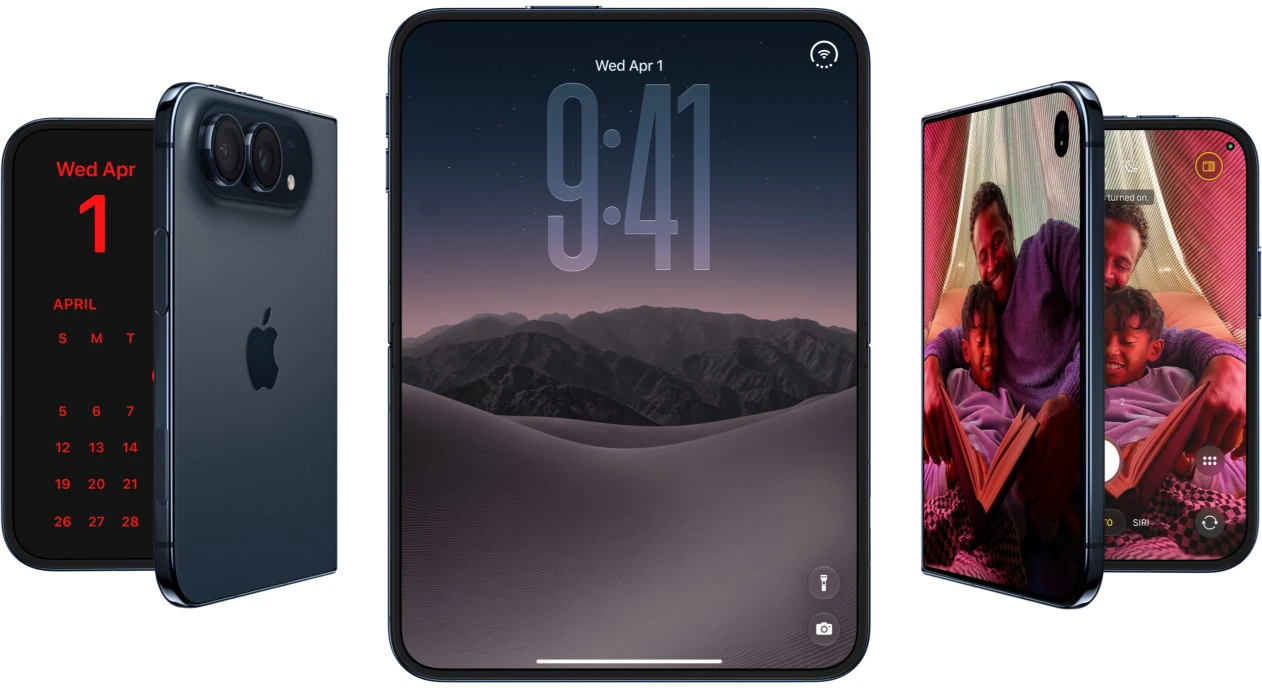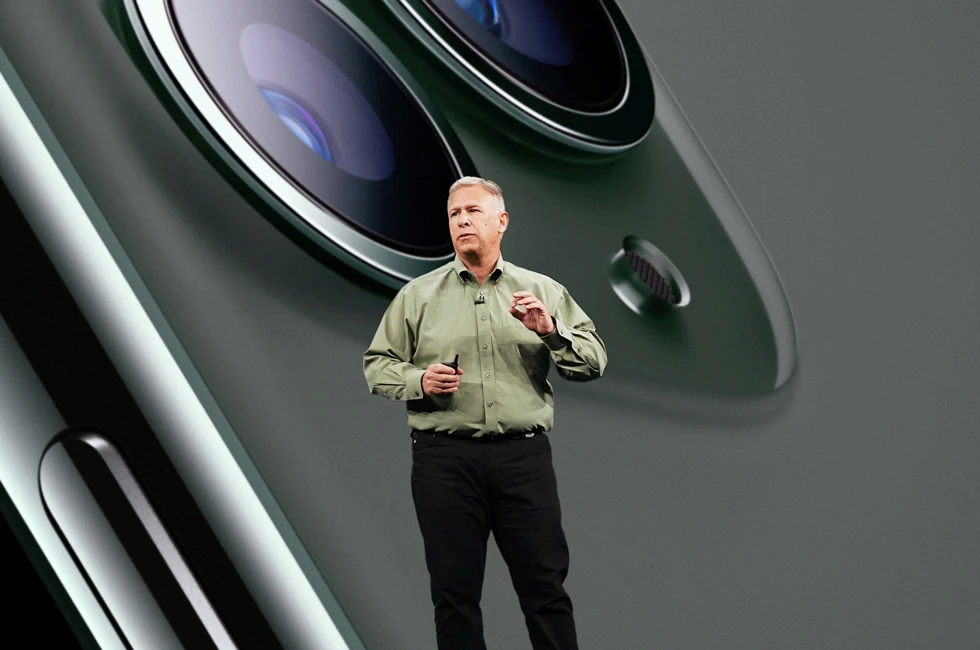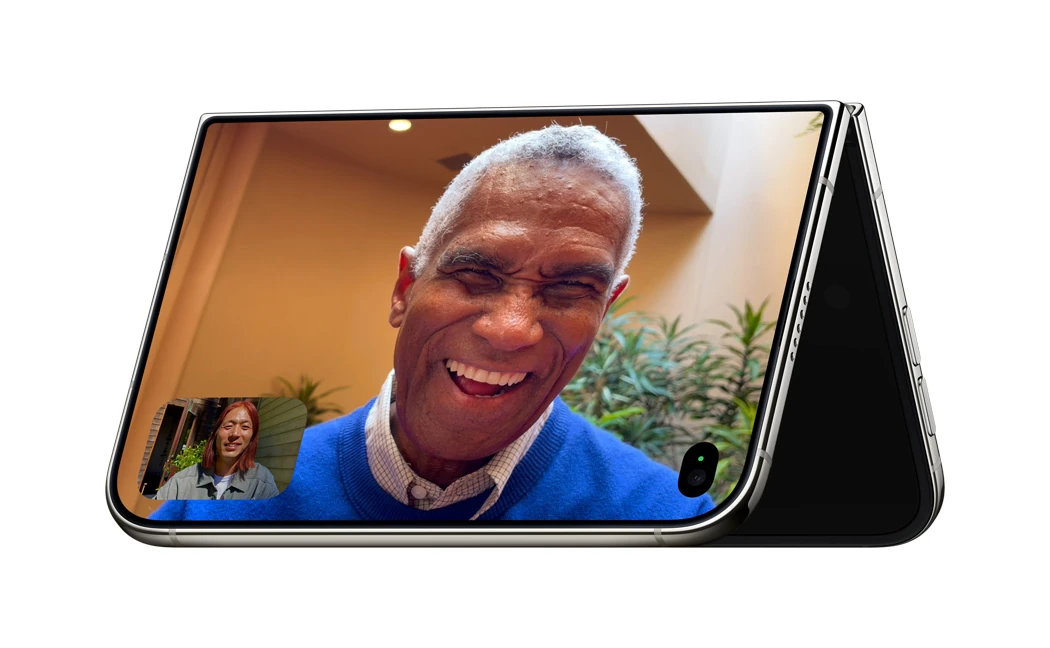
Following its presentation, the iPhone Duo was handled by the first journalists present at Apple Park. Positive feedback centers on the inner display and iOS integration, while concerns are already raised regarding its form factor, camera setup, the abandonment of Face ID, and its price point.
Standout Features: Display, Build, and Software
The quality of the 7.6-inch inner screen emerges as one of the standout features from early hands-on reviews. Its nano-textured finish significantly reduces reflections and contributes to making the crease particularly discreet. Several journalists explain that it is difficult to detect when the screen is used normally, and it is almost imperceptible to the touch. Apple confirms that the inner panel uses ten ultra-thin layers and a specific coating designed to mitigate reflections.
The hinge and build quality also elicit positive responses. The Independent described a mechanism fluid enough that opening and closing become naturally effortless. Apple utilizes a Grade 5 titanium frame and cover, announcing an IP68 certification for water and dust resistance—a notable level of protection for a foldable device.
Software integration appears to be another particularly convincing element. iOS 27 adapts the interface when transitioning between the outer and inner displays, as well as across different hinge positions. Two apps can be used side-by-side, while certain interfaces reorganize themselves when the phone is partially folded. After minutes of handling, The Independent estimates that the gestures required for multitasking quickly become intuitive. Early American reviews also highlight the continuity between the two screens and the versatility of the form factor for both work and entertainment.
Necessary Compromises in the Foldable Design
However, these qualities do not eliminate the compromises inherent in this new format. The iPhone Duo abandons Face ID in favor of Touch ID, which is integrated into the side button. While this choice frees up space within a device whose thickness is a major constraint, it also represents a departure from biometric authentication that has been used on high-end iPhones for several generations. Some observers have also noted the asymmetry of the bezels around the screen, a visible consequence of the device's unique architecture.
Early hands-on reviews also scrutinize the camera system. Apple uses two 48-megapixel Fusion cameras and offers 0.5x, 1x, and 2x focal lengths, but lacks a dedicated telephoto lens. The under-screen FaceTime camera also raises reservations regarding its quality—a point that will need more precise evaluation during full testing.
The price constitutes the other obvious limitation. In the United States, the iPhone Duo starts at $1,999. This positioning reinforces the impression of a product intended initially for users willing to pay a premium for access to the first foldable iPhone. Reviewers who tested it remain cautious about its ability to convince anyone beyond technology enthusiasts.
Conclusion and Future Evaluation
Ultimately, these early hands-on experiences reveal a device that is more notable for its execution than for innovating new use cases. Multitasking, intermediate positions, or using an external screen are features already available from competitors. Apple seems primarily focused on making these uses more consistent with the iPhone experience, while specifically refining the hinge, software continuity, and crease discretion. Prolonged testing will now be necessary to assess battery life, screen durability, and the true daily relevance of the form factor.
The iPhone Duo makes positive first impressions on essential features like the display, hinge, and iOS integration. It remains to be determined if this level of execution quality will be enough to offset the necessary trade-offs required by a foldable form factor and its very high-end market positioning once the novelty of the first foldable iPhone wears off.