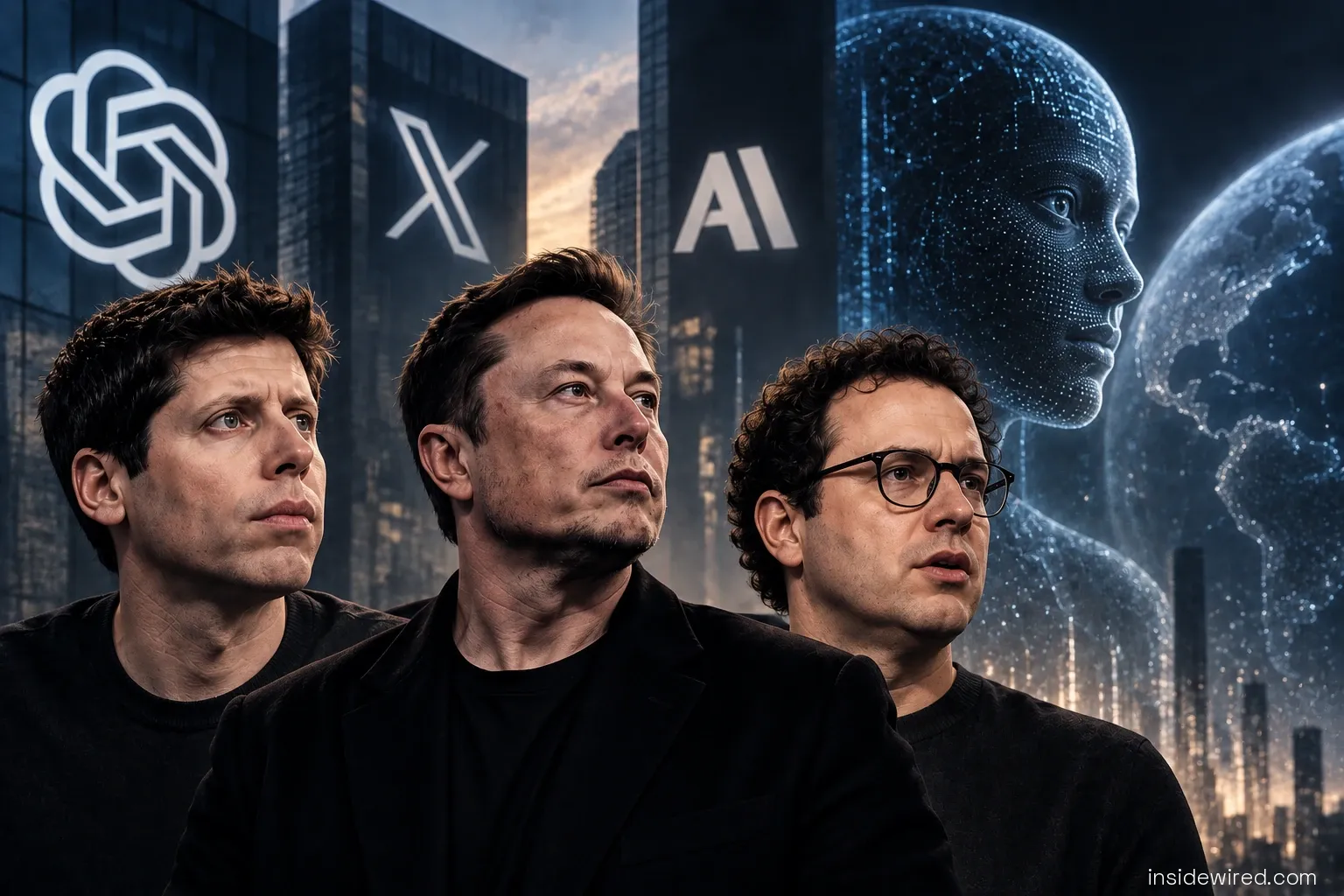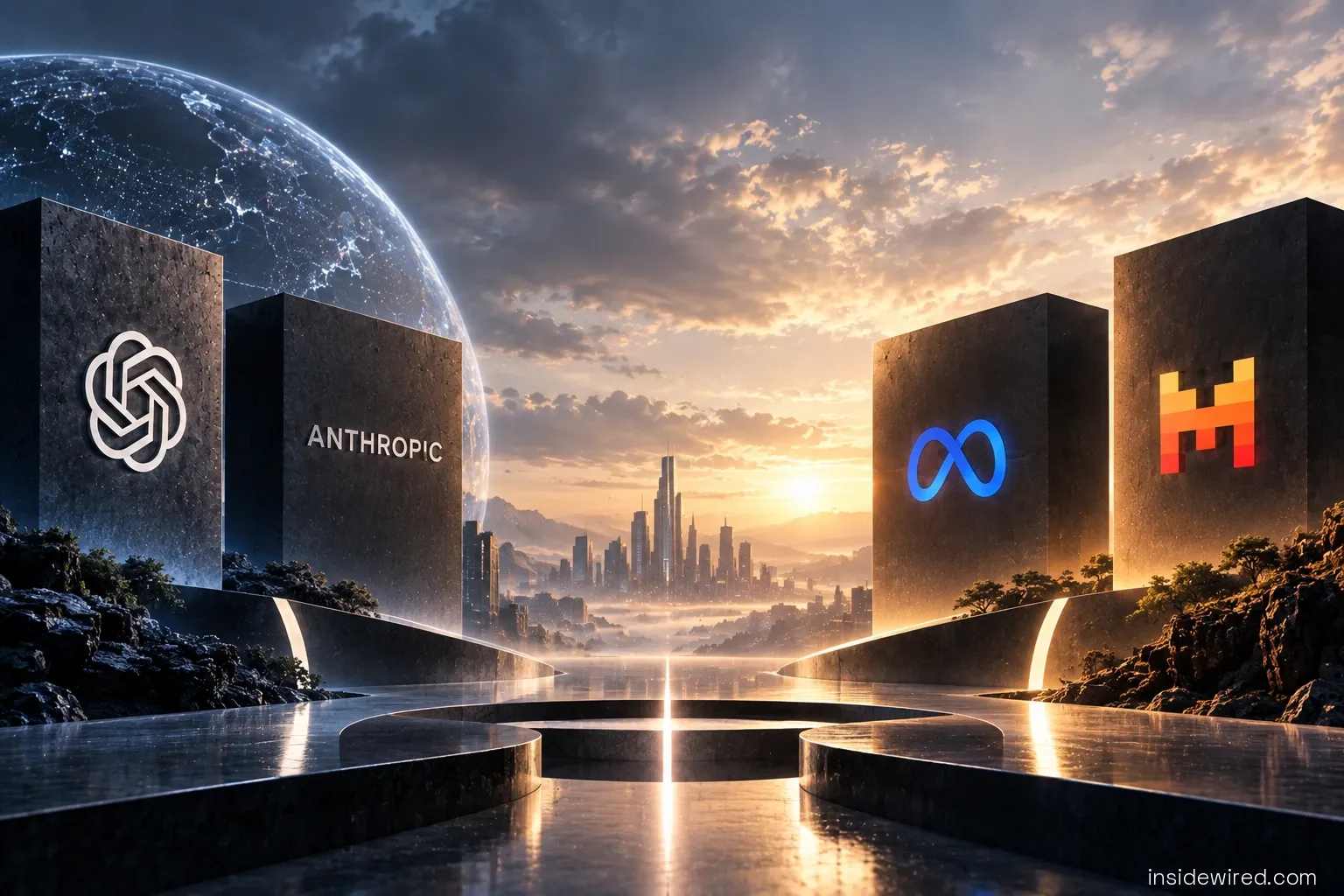
Anthropic's call to slow down the development of advanced artificial intelligence systems is now openly dividing the industry. While OpenAI supports the idea of a more measured pace, Meta believes that each lab can ensure its own safety. Meanwhile, Mistral AI disputes restrictions that, according to the French company, could only strengthen the position of already dominant players.
Just days after Dario Amodei called for a slowdown in advanced AI systems' progression, disagreements among major labs have become more visible. Anthropic's leader particularly advocates for better corporate coordination, independent evaluations, and the possibility of reducing development speed when capabilities progress faster than safety mechanisms. Sam Altman backed the principle of measured development but specified that this does not mean stopping AI progress entirely.
Mark Zuckerberg, on the other hand, rejects the idea of a coordinated slowdown. The Meta leader estimates that every lab already has sufficient economic and legal reasons to develop its models responsibly. He argues that agents failing to meet user expectations will lose commercial interest, while companies could be held liable for damage caused by their systems.
Individual Responsibility vs. Global Pace
Zuckerberg cites Meta as an example of this approach. The company delayed the launch of its Muse agent for several months to reinforce security, without waiting for a similar agreement from its competitors. Meta also calls upon independent evaluators in multiple domains—a practice Zuckerberg seeks to generalize across the industry. For him, these measures can be taken individually without imposing a common pace on all labs.
Mistral AI presents a different critique. The French company acknowledges the risks associated with models possessing action autonomy and external tool access, advocating for strict control over these accesses. However, it disputes that new coordinated restrictions are necessarily the correct answer. In a statement relayed by several French media outlets, Mistral suggests that certain established players may benefit from promoting regulatory frameworks difficult for their competitors to follow. The company thus frames the debate not merely as a safety issue, but also as one of competition and market control. This accusation represents Mistral's position and does not itself prove that OpenAI or Anthropic's calls stem from an anti-competitive strategy aimed at limiting competition.
Meta's stance aligns more closely with Nvidia. Jensen Huang similarly argues that safety and rapid innovation are not incompatible, and that each company must slow down when a specific product is insufficiently safe, rather than imposing a general slowdown on the industry.
The debate has moved beyond simple opposition between acceleration and safety. Anthropic and OpenAI advocate for increased coordination and shared evaluation, while Meta favors individual lab accountability, and Mistral warns against turning safety requirements into entry barriers. A secondary debate thus emerges behind the issue of AI development pace: determining who should set the rules and how to prevent those rules from favoring some players at the expense of others.
Ultimately, the disagreement among labs now concerns artificial intelligence governance as much as its speed of development. While safety is largely agreed upon as an objective, the means to enforce it and the actors responsible for defining the rules remain deeply disputed.