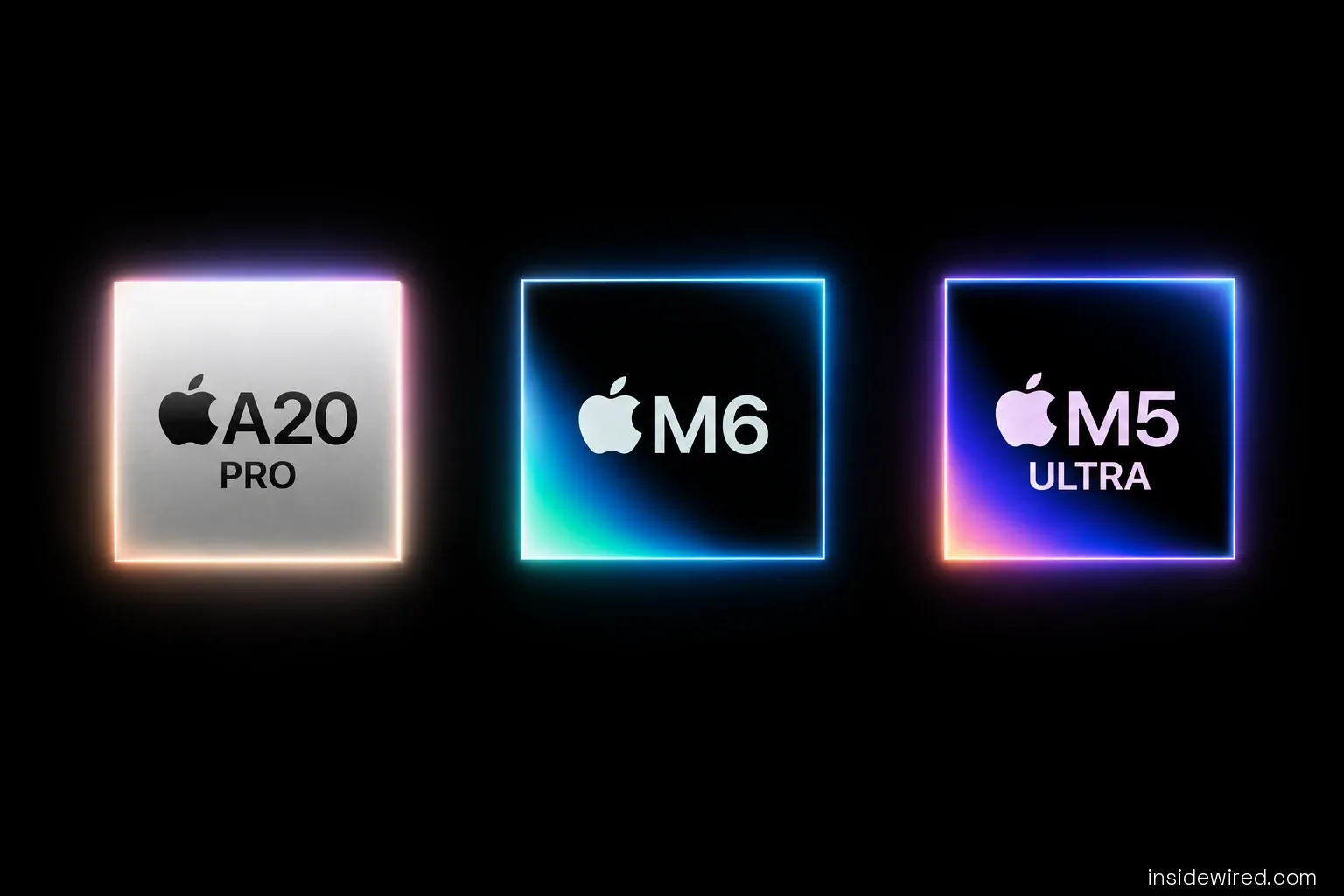
Apple's latest chips are beginning to undergo rigorous benchmarking and independent testing. From the A20 Pro in the iPhone 18 Pro to the M6 in the Mac mini and the M5 Ultra in the Mac Studio, results show significant gains across CPU, GPU, and artificial intelligence workloads. Beyond the figures announced by Apple, initial trials primarily sketch out a range of increasingly specialized chips tailored for specific uses.
A20 Pro: Mobile Performance Advancements
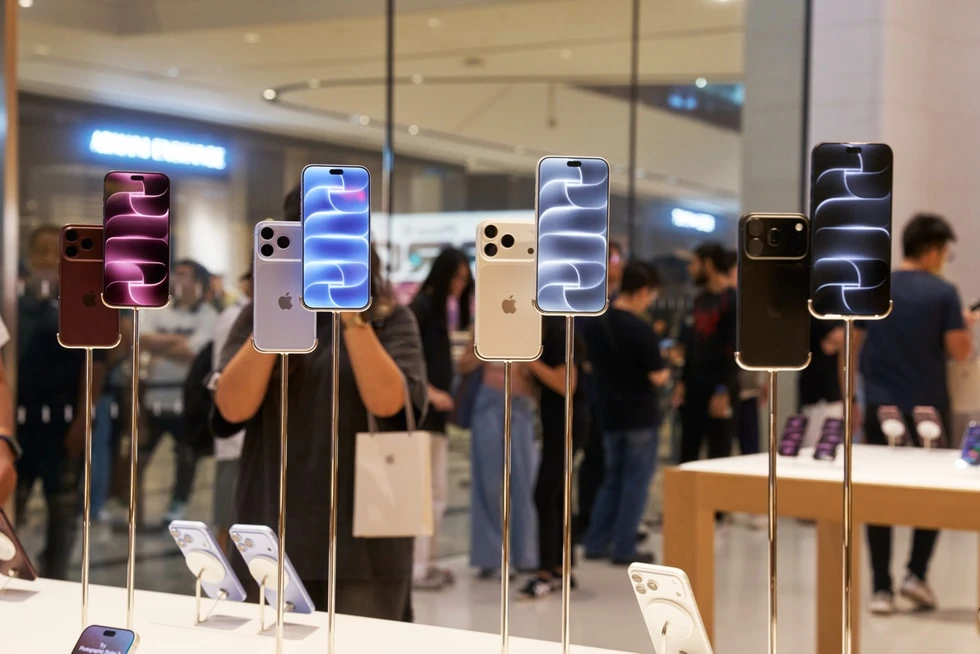
The A20 Pro initiates this new generation on mobile devices. Fabricated using 2 nm, the chip in the iPhone 18 Pro combines six CPU cores and a seven-core GPU. Its architecture is designed to boost performance while maintaining it longer thanks to the phone's new cooling system.
Initial testing shows substantial progress in both CPU and GPU. Tom’s Guide described the iPhone 18 Pro as the fastest smartphone they have tested so far on their testing bench, and sustained performance has also improved, confirming that the new vapor chamber plays a significant role during prolonged tasking.
This advancement is particularly visible in CPU benchmarks:
- The A20 Pro places significantly ahead of the A19 Pro in both single-threaded and multi-threaded performance.
It is important to note that comparisons must remain cautious, as a benchmark measures a specific type of load and does not allow for a direct comparison between a smartphone's performance and that of a computer with more cores, memory, and a different thermal envelope. The A20 Pro primarily demonstrates the limits Apple has reached in pushing its mobile architecture.
M6: General-Purpose Mac Improvements
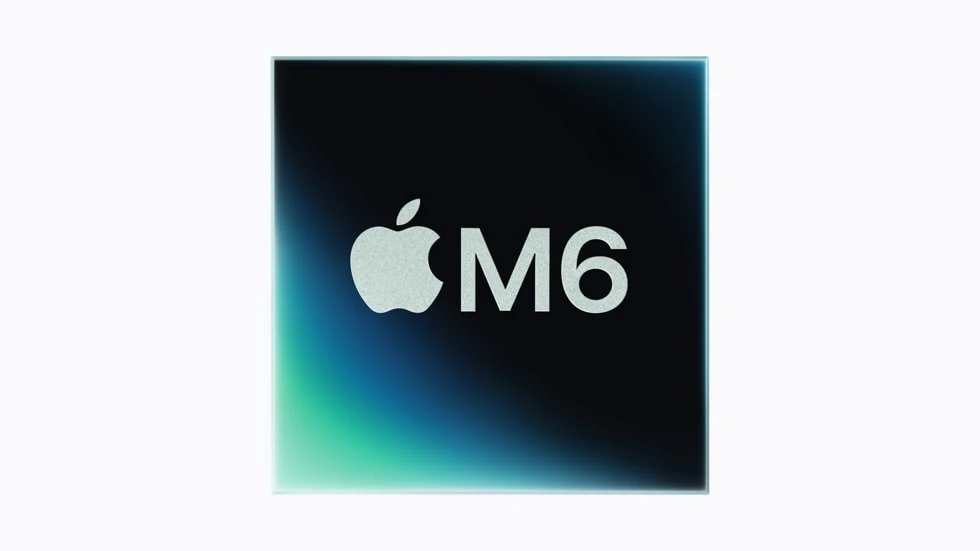
On Mac, the M6 continues this evolution with a different architecture. This first Apple chip for Mac fabricated using 2 nm incorporates twelve CPU cores—two Super cores, four performance cores, and six efficiency cores—as well as a twelve-core GPU and a dual 16-core Neural Engine.
Key specifications reported by Apple include:
- Memory bandwidth up to 170 GB/s.
- Unified memory up to 32 GB.
Ars Technica's tests provide independent measurements of these advancements, showing that the M6 is roughly 8 to 10% faster than the M5 family in single-threaded performance and about 20% faster than the M5 in multi-threaded benchmarks. Compared to the M4, the gaps are even more pronounced, particularly under graphic and multi-core workloads.
Initial GPU results follow a similar trend:
- Geekbench 7 assigned the M6 a Metal score of up to 93,217 points, representing about 34% higher than the average observed for the M5.
However, these results must still be interpreted with caution, as applications do not benefit equally from new GPU cores, Neural Accelerators, or architectural advancements. Nonetheless, real-world tests by Ars Technica indicate that the M6 represents a significant leap for Apple's general-purpose chip, even if the M5 Pro and M5 Max naturally retain the advantage in massively multi-core workloads.
M5 Ultra: Professional Workstation Powerhouse
The M5 Ultra operates on an entirely different scale, designed specifically for the Mac Studio. It utilizes a quad-die architecture connected by UltraFusion and can integrate up to 36 CPU cores, 80 GPU cores, and 512 GB of unified memory. Its memory bandwidth reaches 1.2 To/s.
This combination is particularly aimed at:
- 3D rendering.
- Professional video editing.
- Local execution of very large artificial intelligence models.
Testing confirms the M5 Ultra’s theoretical potential:
- The Verge reported approximately 30% additional performance across various CPU and GPU workloads compared to the M3 Ultra Mac Studio.
- Tom’s Hardware highlighted the critical importance of the 1.2 To/s bandwidth and large unified memory for local AI, allowing the Mac Studio to load models that are difficult to execute entirely in memory on configurations equipped with more traditional GPUs.
The initial graphics scores further illustrate this potential: Geekbench 7 recorded up to 366,744 points in Metal, about 59% higher than the average of the M3 Ultra referenced at the time. This measurement should be viewed with nuance, as it compares a limited number of results against an average comprising different configurations of the M3 Ultra.
Comparing the Architectures
The A20 Pro, M6, and M5 Ultra collectively illustrate three distinct strategies:
- A20 Pro: Focuses on pushing mobile performance while working on maintaining that performance within a constrained chassis.
- M6: Significantly increases the CPU, GPU, and AI capabilities of Apple's general-purpose Mac chip.
- M5 Ultra: Emphasizes massive parallelism, unified memory, and bandwidth for specialized professional workloads and local AI execution.
Early independent tests confirm significant gains across all segments, but they also emphasize that comparing these advanced chips cannot be reduced to a single benchmark score.
Initial benchmarks confirm that the new generation of Apple Silicon advances on multiple levels, from smartphones to workstations. The future success will primarily depend on applications capable of utilizing the new GPU architectures, neural accelerators, and the substantial memory capabilities highlighted by Apple.