Google is introducing Gemini 4 Argon not as a more talkative chatbot, but as a model capable of sustaining complex technical work over extended periods. Its announced one million token output limit enables large-scale code migrations and research; however, it also shifts the primary challenge toward controlling, costing, and verifying trajectories that no person can read entirely in real time.
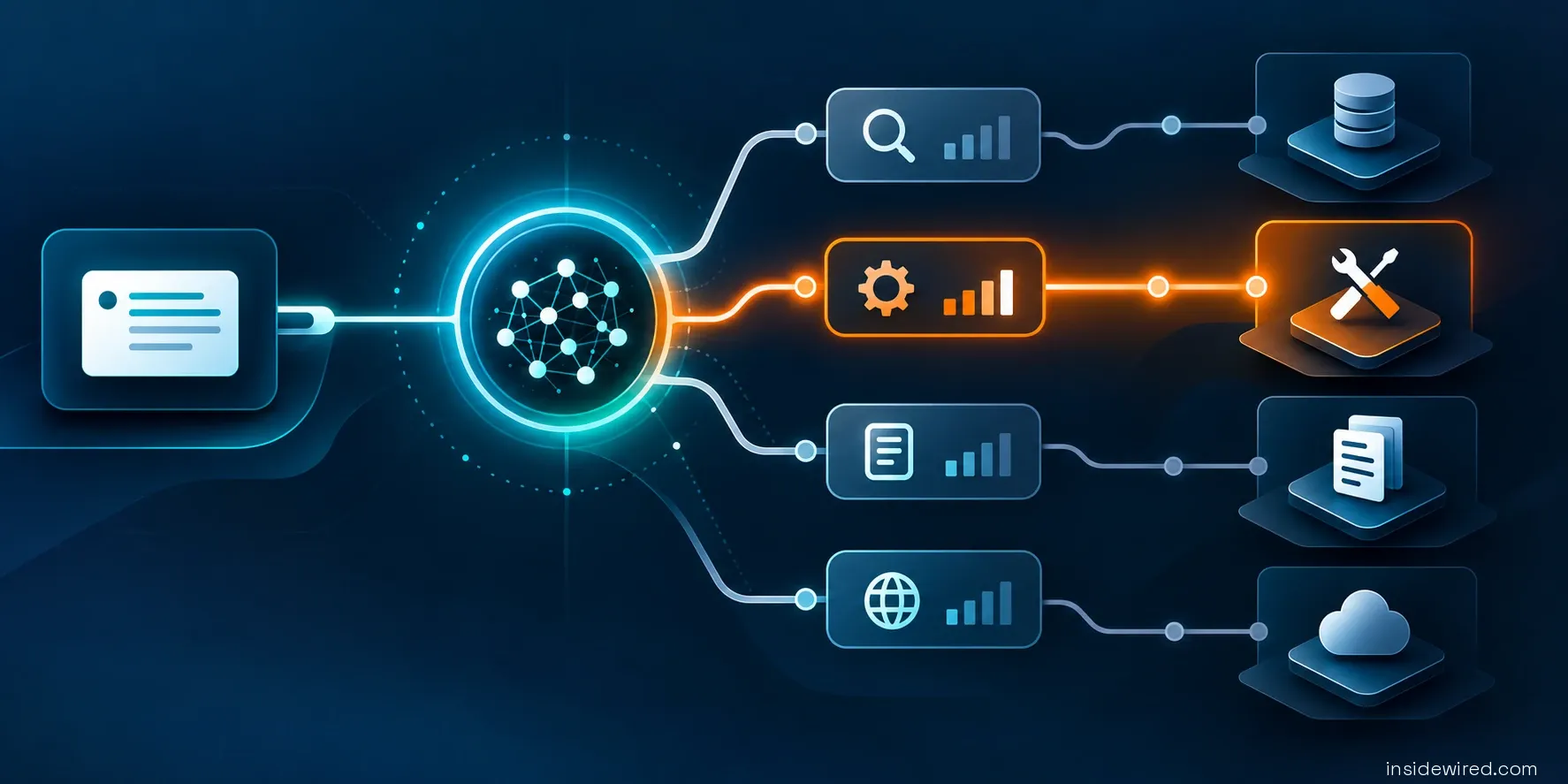
A million tokens in output is not an invitation to generate endless reports. For Google, the new Gemini 4 Argon limit must enable the model to complete tasks composed of thousands of steps: examining a vast code repository, proposing a migration, running tests, correcting errors, and restarting. Generation thus becomes the trail of an agent's trajectory rather than text intended for reading from start to finish.
The Significance of Output Tokens
The announced leap is spectacular: Google cites a jump from 64,000 to one million output tokens. It is crucial not to confuse this figure with the context window, which measures what the model can receive. Instead, the output token limit describes the maximum quantity the system can produce during a single task. In technical use, these tokens may contain code, commands, intermediate analyses, and successive corrections. The interest lies therefore less in the visible length than in the capacity to remain engaged toward an objective.
Demonstrating Scale and Capability
Google highlighted several internal results achieved using Argon. These reportedly include freeing approximately 300 terabytes of storage, with a potential estimated between 500 terabytes and one petabyte. Furthermore, it assisted in migrations to Rust, including work touching about 800,000 lines of the Fuchsia kernel. The group also mentioned a 40% improvement in a quantum optimization task. While these examples demonstrate the vast scope targeted, they remain cases selected by the vendor and must be documented and reproducible to distinguish general capability from highly constrained integration.
The published benchmarks reflect this power, with Google announcing scores of 77.9 on DeepSWE and 51.3 on AutomationBench. A high score suggests that the model plans, codes, and uses tools effectively; however, it does not necessarily measure the maintainability of a change, the quality of a business decision, or the ability to recognize when an objective is poorly formulated.
Governance and Verification Challenges
The immense potential of long trajectories introduces significant challenges in supervision and control. The longer the agent's journey, the more likely that a small initial error can contaminate a large volume of work before being detected. This means no manager can read an output of this size line by line. Confidence must therefore rely on intermediate validations: automated tests, type checking, access policies, result comparisons, and human approval at irreversible stages. A long-running agent should not be given an open environment simply because it is more capable; rather, it must be broken down into observable phases with defined budgets and stopping criteria.
Cost contributes heavily to this governance framework. Google announces that for its introductory phase, the fee will be $2 per million input tokens and $10 in output tokens. Therefore, a trajectory consuming the entire limit would cost at least ten dollars for generation alone, excluding new attempts, tool calls, or context. While this amount may seem minor compared to the work of an engineering team, it becomes significant when a company deploys hundreds of agents or permits poorly controlled loops. The useful measure must be the cost of a validated task, not merely that of a token.
Phased Rollout and Developer Utility
The limited availability reinforces caution. Google is initially reserving Argon for cyber defenders through Fairwind before widening access. This approach implicitly acknowledges that autonomous coding capabilities can serve both defensive and offensive purposes, and the phased rollout gives the group time to observe usage patterns, test controls, and adjust boundaries.
For developers, Argon could fundamentally change the granularity of work delegated to AI. Previously, one typically delegates a function, a test, or a local analysis. A very long trajectory allows for considering the modernization of an entire subsystem, exhaustive document research, or optimization that generates and evaluates numerous hypotheses. Responsibility does not disappear: the user must define the objective, build the testing environment, and decide which changes warrant retention.
Ultimately, Argon's promise is not merely "more text," but maintaining a continuity of reasoning and action over a duration previously inaccessible. If this continuity is accompanied by robust checkpoints and validation systems, it can drastically reduce the cost of laborious and massive work. Without visibility into every step, however, there remains a risk of producing considerable changes whose underlying logic becomes difficult to audit. The million tokens represents an infrastructure for agents; its true value will be determined not by its capacity, but by the quality of the validation system built around it.