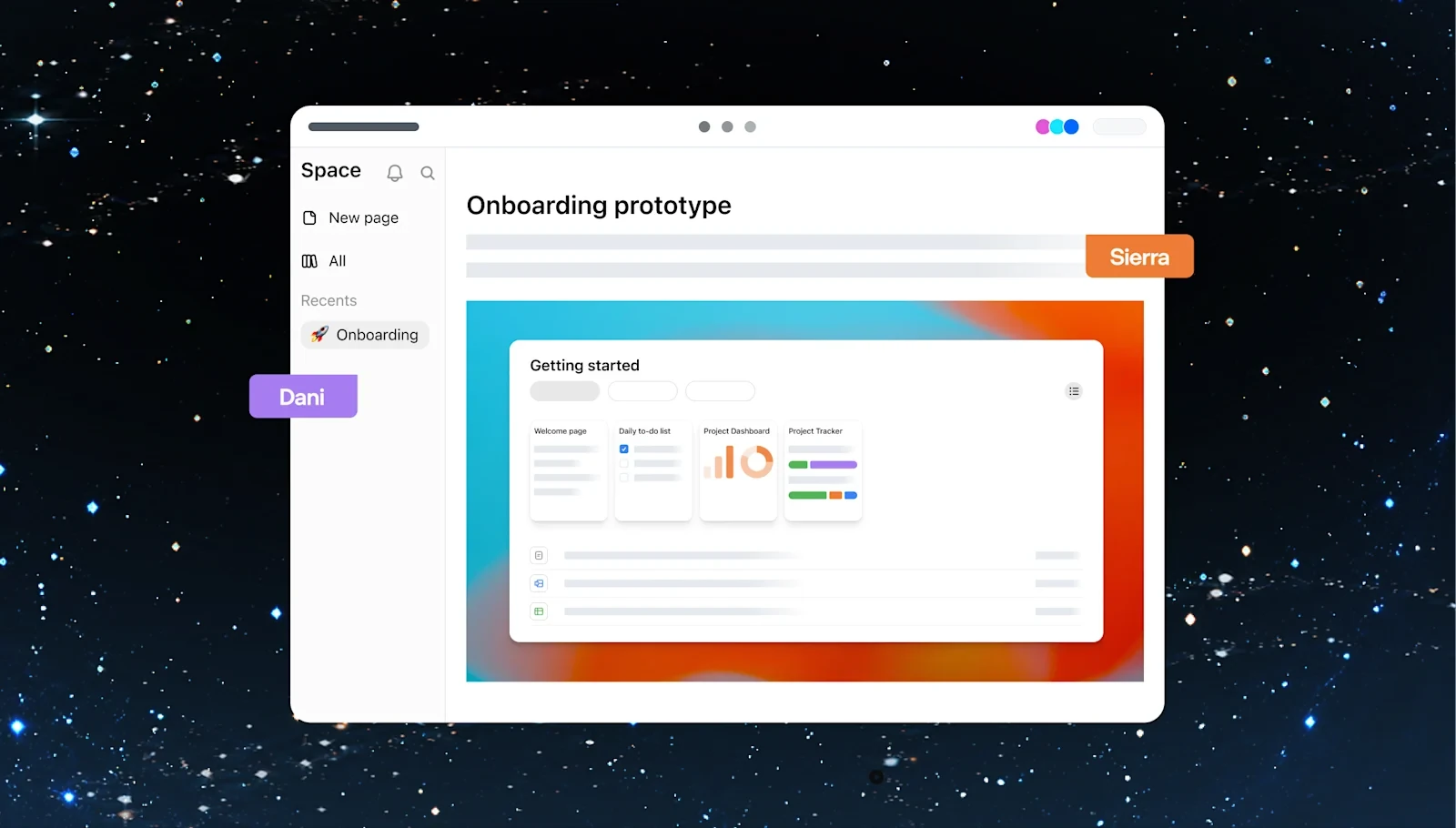
With Space, OpenAI is no longer simply adding a mode to ChatGPT; the company is building a workspace where documents, files, colleagues, and agents share a single context. Dots become persistent collaborators that can be mentioned on any given page. This promise is powerful, but it moves complex questions of permissions, provenance (source origin), and accountability directly into the core document.
The Ambition of Unification
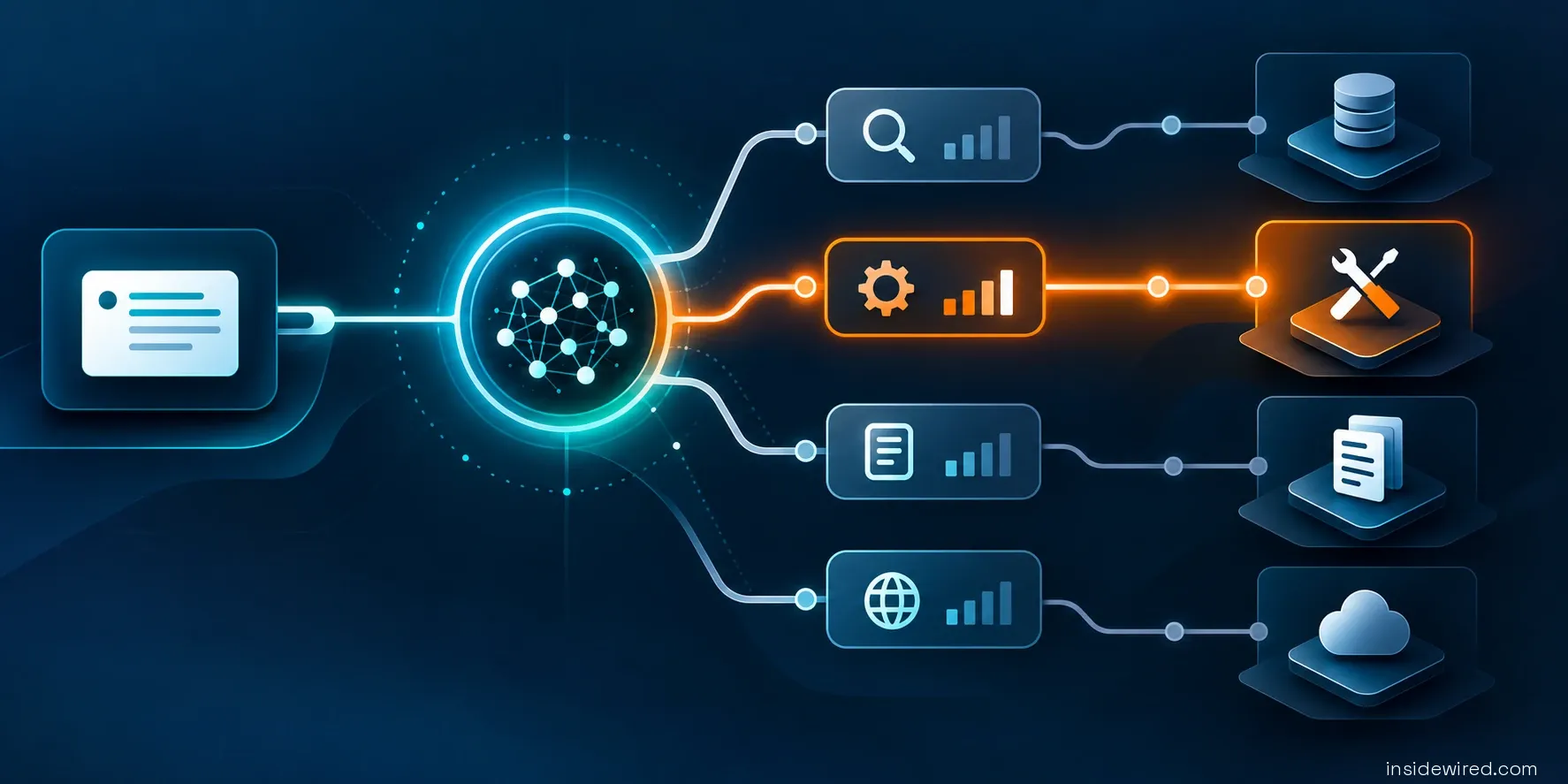
The name "Space" might suggest only a simple shared folder. OpenAI’s proposal, however, is more ambitious: to unify pages, files, people, and agents capable of acting upon this content within one environment. Instead of leaving a document open to a chatbot, the user can mention ChatGPT or a Dot directly on the page, asking it to analyze an attachment, draft a section, or generate a visualization. The result remains within the workspace, where the team can comment on and modify it.
This organization addresses a common weakness in existing AI assistants. While a conversation understands the immediate request, it easily loses the structure of a project—reference documents, prior decisions, owners, and versions. Space seeks to transform this ephemeral context into a durable environment. Pages and files are no longer just attached to a query; they become the shared terrain upon which humans and agents work.
Governing Collaboration and Data Integrity
Collaboration relies on permissions for viewing, commenting, and editing. While these roles are familiar to users of traditional office suites, the arrival of agents changes their scope significantly. A human colleague who can read a document does not necessarily review every piece of project material. An agent, by contrast, can quickly index many files, combine them, and produce a synthesis that reveals dispersed information. Therefore, access control must apply rigorously to the source content, the connected tools, and the generated outputs.
The integrated applications further expand this scope. If Space can pull information from other services, it effectively becomes an entry point into a company's corporate data. While this gains fluidity—there is no longer a need to manually copy every piece of material—a single misconfiguration could allow an agent to mix together information that should never appear on the same page. Administrators must possess a deep understanding of inherited authorizations, which accounts are used, and content retention policies.
The Dots represent the newest element in this system. Presented as always-available agents, they can be given an identity, instructions, and a recurring role. A Dot can track a subject, prepare a synthesis, or intervene when it is mentioned. In Space, it ceases to be an isolated assistant and becomes a participant in the workflow itself.
To maintain continuity, an editorial team could ask a Dot to check source consistency; a product team, to summarize user feedback; and a research group, to maintain a state-of-the-art report. However, this requires careful governance: a poorly defined permanent agent might generate noise, repeat errors, and multiply changes that humans must then filter out.
Provenance becomes therefore essential. A sentence drafted within a page should indicate whether it originated from a human, a file, a connected application, or an AI generation. Citations, modification history, and action logs are necessary to understand how a result was achieved. Without them, a final document may seem coherent while mixing verified facts, hypotheses, and text invented by the model.
Market Positioning and Operational Scope
Space directly enters competition with major productivity suites like Google and Microsoft, which already integrate their assistants into enterprise documents and tools. OpenAI attempts to reverse this perspective: starting from ChatGPT and building a document space around it, rather than adding an assistant feature to an existing suite. This approach may appeal to teams whose work begins within a conversation; however, it becomes a drawback if Space does not cover the layout, tables, approval processes, or administration expected of a traditional office environment.
The product architecture must also avoid confusion regarding names and levels. A Space contains pages, files, and collaborators; a Dot acts as an agent; ChatGPT can be invoked within a page. For a person accustomed to folders and documents, this complex yet simple architecture must remain understandable without training.
Ultimately, the launch of Space signals that the AI battleground is shifting from the quality of the response itself to the organization of work. A performant model is useful; but an environment capable of preserving context, distributing permissions, and allowing multiple actors to collaborate can be far more difficult to replace. Space will be convincing if it makes collective work more legible rather than just adding another layer of automation. Teams must be able to see what an agent read, why it acted, what it modified, and how to revert the action. For this system to build trust, permissions, provenance, and history must prove capable of managing continuous collaboration.